

Decimal hours
--
Free · Instant · No signup
Add or subtract two hour-minute-second spans and return the normalized total.
Page updated 2026-09-04.

Decimal hours
--
Total seconds
--

2 hours 15 minutes 30 seconds plus 0 hours 45 minutes 50 seconds equals 3h 1m 20s -- or as decimal hours, 3.0222, and as a raw total, 10,880 seconds.
The carrying logic here works exactly like standard arithmetic with a base of 60 rather than 10: 30 seconds + 50 seconds = 80 seconds, which carries as 1 minute and 20 remaining seconds; 15 minutes + 45 minutes + that carried 1 minute = 61 minutes, which itself carries as 1 hour and 1 remaining minute -- giving the final 3h 1m 20s.
All three output formats (h/m/s display, decimal hours, and total seconds) represent the exact same duration -- decimal hours is useful for feeding into a rate calculation (like hourly billing), while total seconds is useful for precise technical or programming contexts.
Negative totals keep a leading minus. Days overflow into extra hours. Switching the operation to subtract, if Duration A is smaller than Duration B, produces a negative result -- rather than an error or a wrapped-around positive value, the output keeps an explicit leading minus sign so the negative duration is clearly visible.
If an addition produces a total exceeding 24 hours, the result doesn't wrap back around to a smaller hour value the way a 24-hour clock display might -- hours simply keep accumulating past 24 (into 25, 30, or however many total hours the sum produces), since this tool tracks total elapsed duration, not a wall-clock time of day.
This is duration arithmetic, not clock-time arithmetic -- adding '2 hours' to another duration is different from adding 2 hours to a specific clock time like 11:00 PM (which would need to account for crossing into a new day); this tool handles the former.
For adding or subtracting time from an actual clock time (crossing midnight, AM/PM) rather than combining two raw durations, the Military Time / 24-Hour Converter and related clock tools are more appropriate.
For calculating net worked duration from a start and end clock time directly (rather than adding two pre-known durations), the Time Duration / Timesheet Calculator is the related tool.
30 + 50 = 80 seconds total. Since 60 seconds make a full minute, 80 seconds carries as 1 minute plus 20 remaining seconds -- the same carrying principle applies to minutes rolling into hours once they exceed 60.
Negative totals keep a leading minus. Days overflow into extra hours. The result comes back negative, shown with an explicit leading minus sign, rather than producing an error or an incorrectly wrapped positive value -- making it clear the second duration was larger than the first.
No. Negative totals keep a leading minus. Days overflow into extra hours. This tracks total elapsed duration, not time of day, so hours continue accumulating past 24 rather than wrapping around -- a sum producing 30 total hours would show as 30h, not wrap back to 6h.
Both represent the identical duration in different units -- decimal hours (3.0222) is convenient for rate-based calculations like hourly billing, while total seconds (10,880) is useful for precise technical calculations or when feeding the value into other software.
No. This adds or subtracts two raw durations (like '2h 15m 30s'), not a duration applied to a specific clock time. Adding time to an actual clock time involves different logic (crossing midnight, AM/PM), which is handled by a separate time-conversion tool.
 Ideal Body Weight (IBW) Calculator (Devine / Miller Formulas) Devine and Miller ideal body weight in kilograms and pounds from sex and height in inches.
 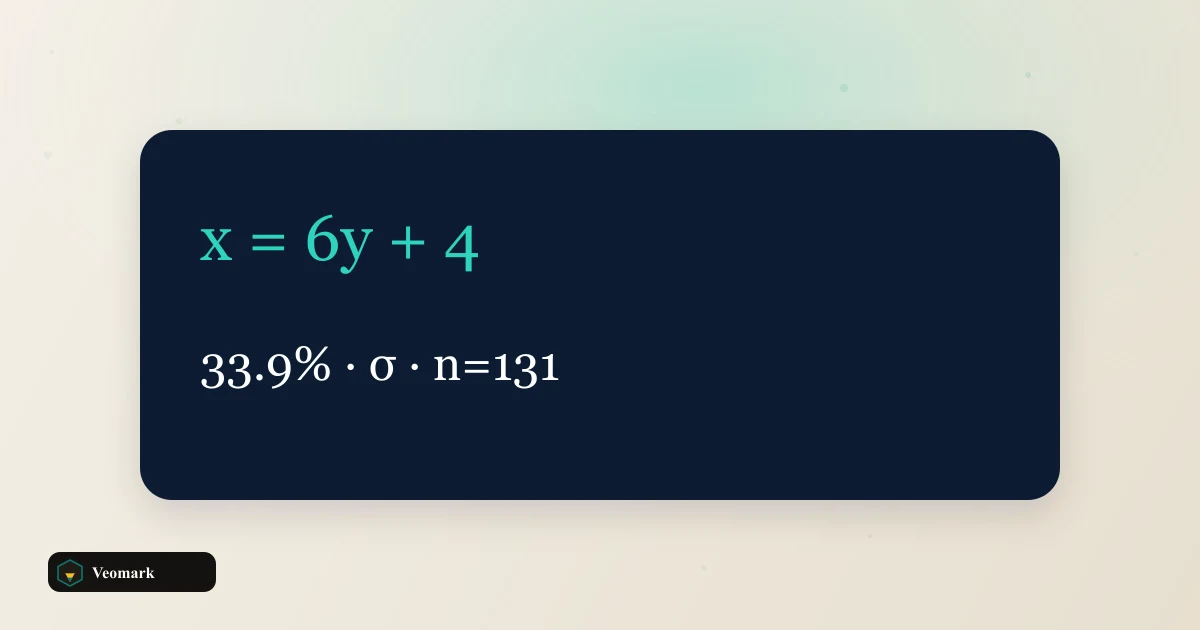 Margin of Error & Sample Size Calculator Margin of error from z, p, and n, or the sample size that hits a target margin of error.
  Speed, Distance & Time Interconvertible Calculator Fill any two of speed, distance, and time (0 means unknown) and solve the third.
  Torque & Power Conversion Calculator (HP to kW) Shaft power from rpm and newton-meters, or convert horsepower to kilowatts.